What and why
Architecture Decision Record (ADR) is a document that captures an important architecture decision made along with its context and consequences.
Architecture decision logs are answering the why? questions which are important in your designs, for example:
- Why did you decide for Trunk-based branching strategy, rather than GitFlow?
- Why do we use Plumi for infrastructure as code, while Terraform seems more popular and widely adopted?
- Shouldn’t we use a relational database instead of DynamoDB(NoSQL) as the source of truth for this system? …
There are no reasons not to document the key decisions and provide short but solid justifications for your options (patterns, tech stacks etc.) chosen.
ADR template
I recommend Profession Olaf Zimmermann (ZIO)‘s Y statement template :
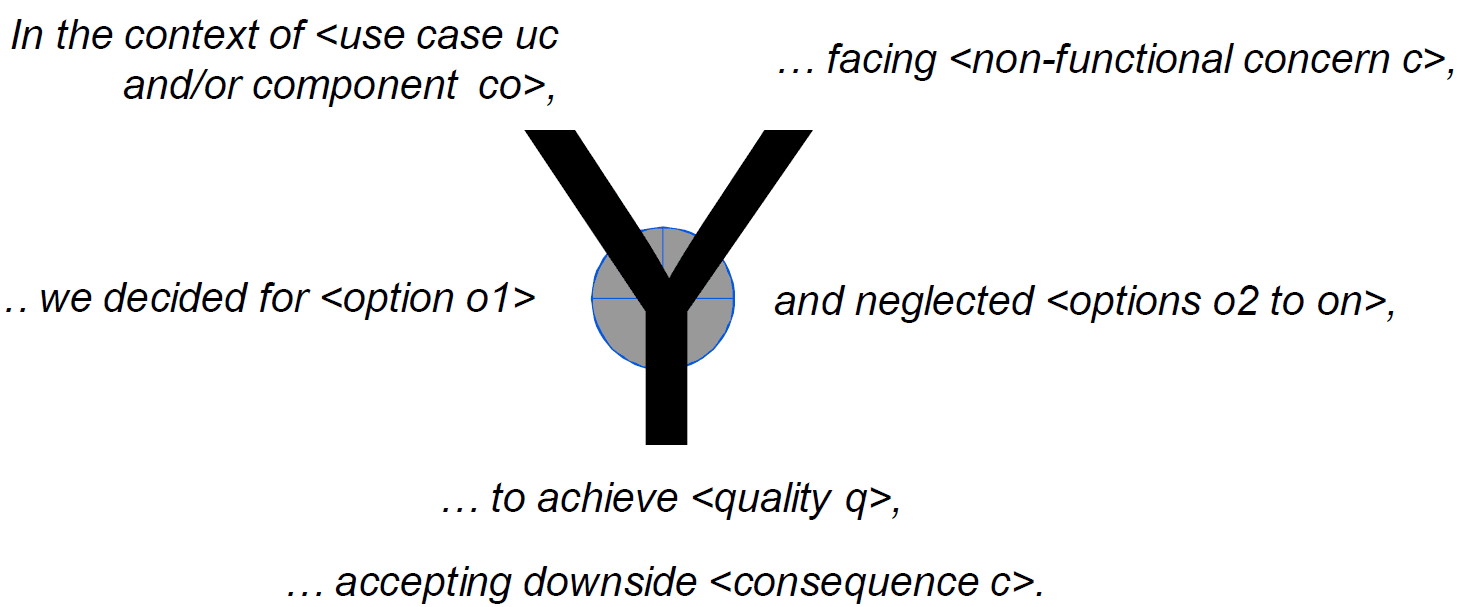
- In the context of: functional requirement or an architecture component
- facing: non-functional requirement
- we decided for: decision outcome
- and neglected: alternatives not chosen
- to achieve: the benefits
- accepting that: drawbacks
Example:
---
status: Proposed
date: 2025-05-25
deciders: Member1
---

# AD: The name of the AD

## Context

## Considered Options

### Option 1

### Option 2

## Decision Outcome

## Consequences
Best practices
AWS published a blog: Master architecture decision records (ADRs): Best practices for effective decision-making about the best practices of ADR recently, which is very much worth reading.
Based on my own experience, I have resonance about the following points:
-
Centralize storage - Store ADRs in a central location accessible to all team members, regardless of their team affiliation. This practice promotes transparency and makes sure that architectural decisions are really available to everyone involved.
-
Promote ownership - Each team member should be empowered to create and own ADRs.
- This practice distributes architectural research work among teams members and offloads that work from architect or team lead.
- It also fosters a sense of ownership in the decision-making process.
-
Keep ADR meetings short and focused - Effective ADR meetings should be time-bound and keep them 30-45 minutes maximum. This focused approach keeps discussions on tract and participants engaged throughout the process
-
Maintain a cross-functional yet lean participant list - Invite representatives from each tem that might be affected by the architectural decisions but thrive to keep the total number of participants below 10.
-
Focus on a single decision - Concentrating on one decision at a time simplifies the decision-making process so that participants can thoroughly evaluate the impact.
-
Embrace team collaboration: The author must own the document and gather feedback from all affected teams before finalizing the decision.
-
Address comments and resolve feedback - Resolve all comments, either by incorporating changes or by discussing and reaching a consensus with the comment author.